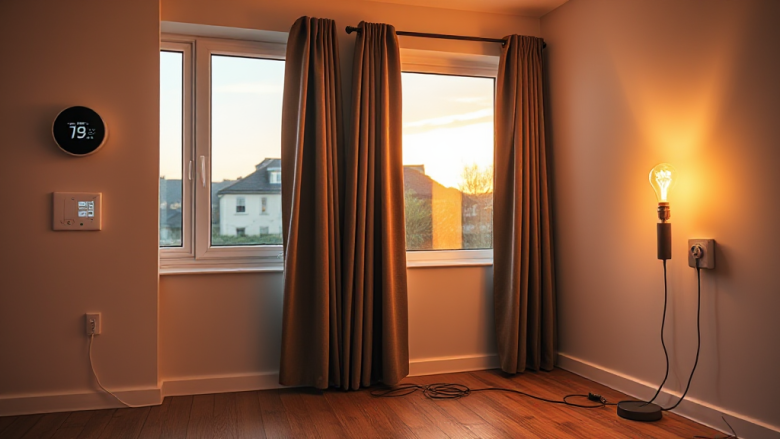
If you have just moved into your first rented flat or bought your first home, the energy bill can feel like a bill you did not agree to. The good news is that home energy saving tips for beginners do not require rewiring the house or spending a weekend researching heat pumps. Start with three changes today: turn your thermostat down by one degree, swap the bulbs in your most-used rooms to LED, and unplug the electronics that sit on standby all night. None of those take more than ten minutes, and all three show up on your next statement.
This checklist is built for renters and new owners who want a clear starting point. Work through it room by room, do what you can, and ignore the rest until you are ready.
Quick Wins by Room
1. Living room: lower the thermostat by one degree
One degree is the single easiest saving in the house. Most people cannot feel the difference, but the boiler notices. Set it to 19°C when you are home and awake, and drop it to 16°C or off when you are out or asleep. If you have a programmer or a smart thermostat, use the schedule rather than nudging it by hand. If you rent and cannot change the thermostat, close the living room door and heat one room instead of the whole flat in the evening.
2. Living room: stop heating an empty room
Close doors between heated and unheated spaces. If the hallway is freezing but the living room is warm, keep the door shut and let the heat stay where you are sitting. It sounds obvious, but most homes leak warmth into corridors and stairwells all evening without anyone noticing.
3. Kitchen: only boil what you need
Fill the kettle to the level you are actually using. Boiling a full kettle for one cup wastes the energy it takes to heat the rest, and it takes longer too. The same logic applies to pans: match the pan to the ring, and put a lid on it. A lid traps heat and can cut cooking time noticeably.
4. Kitchen: let the dishwasher and washing machine do full loads
Half loads use roughly the same energy as full ones. Wait until you have a full load, then run it on the eco setting. Eco cycles run longer at lower temperatures, which uses less energy overall than a short hot wash. If you have a tumble dryer, use it sparingly. A drying rack near a radiator or an open window costs nothing to run.
5. Bathroom: shorten showers and fix the dripping tap
Heating water is one of the biggest chunks of a typical energy bill. Cutting a ten-minute shower to seven minutes saves hot water every single day. A dripping hot tap wastes heated water continuously, so if you rent, report it, and if you own, replace the washer. A low-flow shower head is a cheap swap that most renters can fit and take with them when they move.
6. Bedroom: switch to LED bulbs
LEDs use a fraction of the energy of old incandescent bulbs and last for years. Replace the bulbs in the rooms you use most first: living room, kitchen, bedroom, hallway. You do not need to do the whole house at once. Buy a pack, swap them as the old ones fail, and you will get there within a year without thinking about it.
7. Bedroom: unplug idle electronics
Chargers, games consoles, televisions, and set-top boxes draw power even when they are not in use. Put the ones in the bedroom on a single switched extension lead and flick it off at night. That one switch can cut standby use across several devices at once. Do the same for the TV corner in the living room.
8. Hallway: draught-proof the obvious gaps
Run your hand around the front door, the letterbox, and any visible gaps under skirting boards. A draught excluder, a brush strip, or a roll of self-adhesive foam costs very little and stops cold air pushing in. Renters can usually fit these without damaging anything, and they come off cleanly when you leave. Heavy curtains drawn at dusk do a similar job for windows.
9. Anywhere: wash clothes at a lower temperature
Modern detergents work well at 30°C. Unless something is genuinely soiled or you are dealing with illness in the house, drop the temperature dial and see if you notice a difference. You probably will not. You will notice the difference on the bill, because most of the energy in a wash cycle goes into heating the water, not spinning the drum.
10. Anywhere: use the sun before you use the boiler
Open curtains and blinds on sunny days, especially on south-facing windows, and let the warmth in for free. Close them at dusk to trap that heat. In summer, do the opposite: close curtains on the sunny side during the day to keep the rooms cooler, so you lean on fans less. It is a free habit, and it works in every home regardless of who owns it.
A Simple Weekly Routine to Track Progress
Tracking is where most beginners give up, so keep it almost effortless. Once a week, on the same day, read your meter and write the number down in your phone notes. That is it. You do not need a spreadsheet or an app unless you enjoy that sort of thing. After three or four weeks, you will start to see a pattern, and you will know whether the changes are actually doing anything.
If you have a smart meter or an in-home display, glance at it at the same time each day rather than watching it constantly. Watching it all day turns saving energy into a stressful hobby. A daily glance is enough to catch the obvious culprits, like a heater left on in an empty room or a tumble dryer running on a sunny afternoon.
Compare your usage week to week, not day to day, because weather and occupancy swing the numbers around. If you are on a fixed tariff, check your monthly statement against the same month last year where possible. If you pay by direct debit, ask your supplier to review the amount once you have a few months of lower usage behind you. You may be able to reduce the monthly payment, which is often the most satisfying part of the whole exercise.
One more thing worth doing early: find out what tariff you are on. If you are out of contract and on a standard variable rate, a quick call to your supplier to ask about cheaper fixed options or off-peak rates can be worth more than a month of small habit changes. You do not need to switch anything today. Just knowing what you are paying and why makes every other decision easier.
Finally, be realistic about what a beginner can achieve. You will not cut your bill in half by unplugging a phone charger. But one degree, LED bulbs, shorter showers, full loads, and a switched-off extension lead add up to a real reduction over a year, and none of them require permission from a landlord or a tradesperson at the door. Start with the three changes in the first paragraph this week. Add one more next week. By the time winter arrives, you will have a routine rather than a to-do list, and the bill will reflect it.